

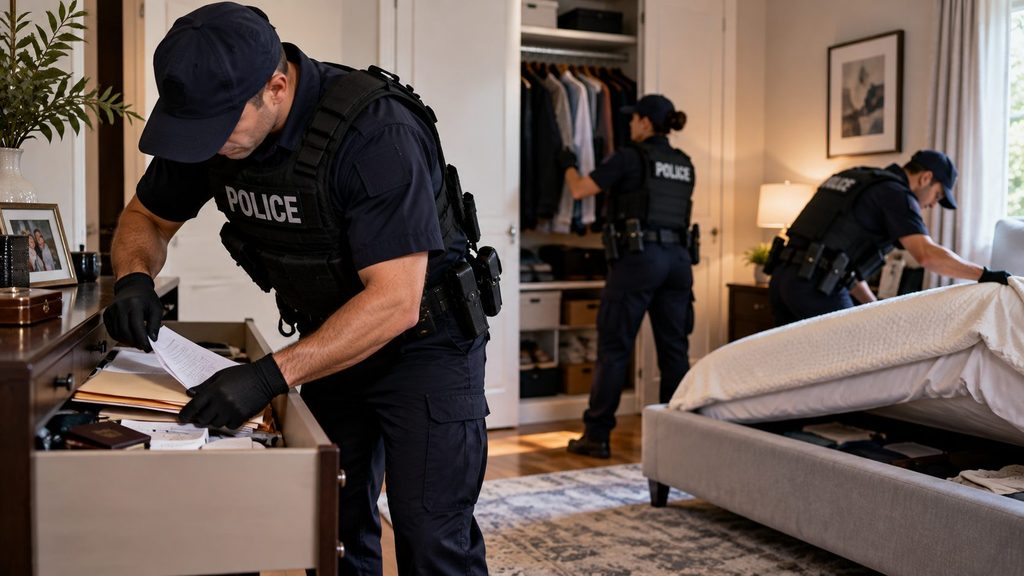
Generally, no. Both the Fourth Amendment to the U.S. Constitution and Article I, Section 5 of the Alabama Constitution protect your home against unreasonable searches, and the default rule is that police need a warrant, signed by a judge and based on probable cause, before they can search it. But “generally” is doing a lot of work in that sentence. There are several well-established exceptions that let officers into your home without one, and understanding where those lines actually sit is often the difference between evidence getting thrown out of a case and evidence sticking.
Here’s what the law actually allows, what it doesn’t, and what to do if officers show up at your door.
The Default Rule: A Warrant, Based on Probable Cause
Under Alabama law, a search warrant has to meet several specific requirements before a judge will sign off on it. The officer requesting it must submit a sworn affidavit establishing probable cause, meaning enough evidence to convince a reasonable person that a crime has been committed and that evidence of it will be found in the specific place to be searched. The warrant itself has to describe that place and the items being sought with real specificity, not a vague, sweeping description that lets officers search wherever they want once they’re inside.
Alabama also generally requires officers to knock and announce their presence and purpose before entering to execute a warrant, giving occupants a reasonable chance to open the door. This requirement can be waived for a “no-knock” entry, but only when officers can show it to a judge in advance, typically because announcing themselves would create a serious risk of danger or give occupants time to destroy evidence.
That’s the baseline. Now here’s where it gets more complicated.
The Exceptions: When Police Can Enter Without a Warrant
1. Consent
If you, or someone else with authority over the property, voluntarily allows officers inside, no warrant is needed at all. This is the exception that catches the most people off guard, because it doesn’t require officers to have any evidence or suspicion whatsoever. They simply need you to say yes.
Consent has to be freely given. If you were coerced, threatened, or misled into agreeing, it may not hold up as valid consent later. But in practice, courts give officers a fair amount of benefit of the doubt about how consent was obtained, which is exactly why saying nothing and asking to speak with an attorney is almost always the safer move than trying to negotiate at the door.
There’s an important wrinkle here too: if you and another adult share a home, and you’re both present when officers ask to come in, one person’s consent doesn’t override another’s clear refusal. The U.S. Supreme Court settled this in Georgia v. Randolph, ruling that if one occupant says yes and another physically present occupant says no, police cannot enter based on the consenting occupant’s permission alone. A landlord, roommate, or family member who doesn’t live there generally can’t consent to a search of your space on your behalf, either.
2. Exigent Circumstances
This is the broadest and most frequently litigated exception. “Exigent circumstances” means an emergency serious enough that waiting for a warrant isn’t realistic. Courts have generally recognized three categories:
- Emergency aid. Officers reasonably believe someone inside needs immediate help, such as hearing screams, sounds of a struggle, or another sign that someone may be seriously injured.
- Destruction of evidence. Officers have a reasonable, specific basis to believe evidence is actively being destroyed and there’s no time to secure a warrant first, such as the sound of a toilet flushing repeatedly after officers announce themselves during a drug investigation.
- Hot pursuit. Officers are actively chasing a fleeing suspect who runs into a home. The Supreme Court has clarified that hot pursuit isn’t automatic just because someone fled from a minor offense; in Lange v. California, the Court held that police chasing a suspect for a misdemeanor generally still need to evaluate whether a true emergency exists before entering without a warrant.
The key word across all three is urgency. Courts scrutinize exigent-circumstances claims closely after the fact, because the exception is broad enough that it can be, and sometimes is, stretched by officers to justify an entry that wasn’t actually urgent. This is exactly the kind of claim a defense attorney will dig into: was there genuinely no time to get a warrant, or could officers have secured the scene and waited?
Notably, the scope of the “emergency aid” exception is still being actively defined by the courts. The U.S. Supreme Court has a case on its docket addressing whether police can rely on a mere reasonable belief that someone inside needs help, or whether something closer to probable cause is required, a reminder that this area of law continues to evolve.
3. Plain View
If an officer is lawfully present, whether through consent, a valid warrant for a different purpose, or another exception, and they see clear evidence of a crime out in the open, they can seize it without a separate warrant. This exception doesn’t give officers a right to enter in the first place; it only applies to what they can see and seize once they’re lawfully inside.
4. Search Incident to Arrest
If someone is being lawfully arrested inside the home, officers can search the immediate area within that person’s reach for weapons or evidence, without a separate warrant covering that specific search. This is narrower than a full search of the residence; it doesn’t automatically authorize officers to search every room.
What About Your Cell Phone or Car?
This article focuses on homes specifically because the Fourth Amendment treats the home as the place where privacy protections are strongest. Cars and cell phones follow different, generally more permissive, rules for police. The Supreme Court has held that searching the contents of a cell phone generally requires its own warrant, even after a lawful arrest, but vehicles are subject to a separate, longer-standing exception (the “automobile exception”) that doesn’t apply the same way to a house.
What to Do If Police Show Up at Your Door
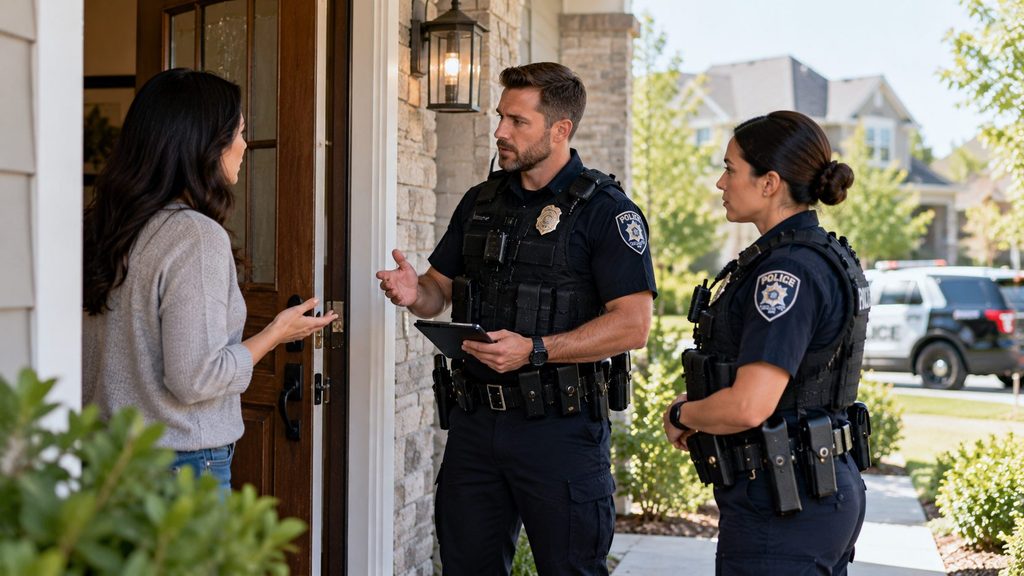
- Ask if they have a warrant. If they do, ask to see it before you open the door. Note what it authorizes them to search and what it doesn’t.
- You are not required to let them in without one. You can decline entry. This is not obstruction, and it is not an admission of guilt. It’s the exercise of a constitutional right.
- Clearly state that you do not consent to a search, even if officers enter anyway. Saying it out loud matters, because it preserves the issue for your attorney to raise later, even if officers proceed regardless of your objection.
- Do not physically resist, even if you believe the entry is unlawful. Arguing the legality of a search in the moment, especially physically, can result in additional charges and doesn’t help your case. The right way to challenge an unlawful search is afterward, through your attorney.
- Say as little as possible beyond stating your objection. Anything you say can end up in a report and used against you later.
- Call an attorney as soon as possible. If a search already happened, an attorney can evaluate whether it was lawful and, if not, move to suppress whatever was found.
What Happens If a Search Was Illegal
If police search your home without a valid warrant and none of the recognized exceptions actually applied, evidence obtained from that search can potentially be excluded from your case under what’s known as the exclusionary rule. Your attorney would file a motion to suppress, asking the court to rule that the search violated your Fourth Amendment and Alabama constitutional rights and that anything found as a result cannot be used against you. In some cases, that’s enough to significantly weaken or completely unravel the prosecution’s case, since evidence obtained through an unlawful search often can’t be used even indirectly, a concept known as “fruit of the poisonous tree.”
This is exactly why the facts of how, and why, officers entered your home matter so much, sometimes even more than what they found once they were inside.
If you’d like to read the underlying law yourself, Alabama’s search warrant requirements are set out in Chapter 5 of Title 15 of the Code of Alabama, and the state constitutional protection against unreasonable searches is found in Article I, Section 5 of the Alabama Constitution.
Frequently Asked Questions
Do I have to open the door if police knock without a warrant?
No. You’re not legally required to open the door or answer questions. You can speak through the door and ask whether they have a warrant.
What happens if I let the police in without realizing I didn’t have to?
Once you voluntarily let officers in, anything they see or find in plain view can generally be used against you, and you may have a harder time later arguing the entry was unlawful. This is exactly why it’s safer to ask questions first rather than open the door automatically.
Can the police search my home if I’m not there?
Yes, if they have a valid warrant, they can execute it whether or not you’re present. Some exigent-circumstances entries can also occur without you present, if officers have a specific, urgent basis to believe entry is necessary.
Can a roommate or family member let the police search my room?
Generally, someone can only consent to a search of areas they have common authority over. A roommate typically cannot validly consent to a search of your private bedroom or belongings, though this can depend on the specific living arrangement.
What should I do if I think the police searched my home illegally?
Don’t confront officers physically or try to argue the point at the scene. Document everything you remember as soon as possible, and contact a criminal defense attorney right away. If evidence was obtained illegally, your attorney may be able to get it excluded from your case entirely.
Think Your Rights Were Violated During a Search? Talk to an Attorney First.
Whether officers showed up with a warrant, claimed an emergency, or simply asked to come in, the legality of that search can significantly affect the outcome of your case. Nick Lough reviews exactly how a search happened, not just what it turned up, before recommending a strategy. If you’re facing charges in Huntsville, Athens, Decatur, or anywhere in Madison, Limestone, or Morgan County, call (256) 333-1191 any time for a free, confidential consultation, or visit our criminal defense page to learn more.

Nick Lough is a Huntsville attorney with nearly a decade of experience fighting for clients in criminal defense, family law, and personal injury cases. He provides dedicated, client-focused legal representation.